Travel with confidence and safety
As the concessionaire of the Rhône, CNR has a duty to remind everyone of essential safety guidelines.
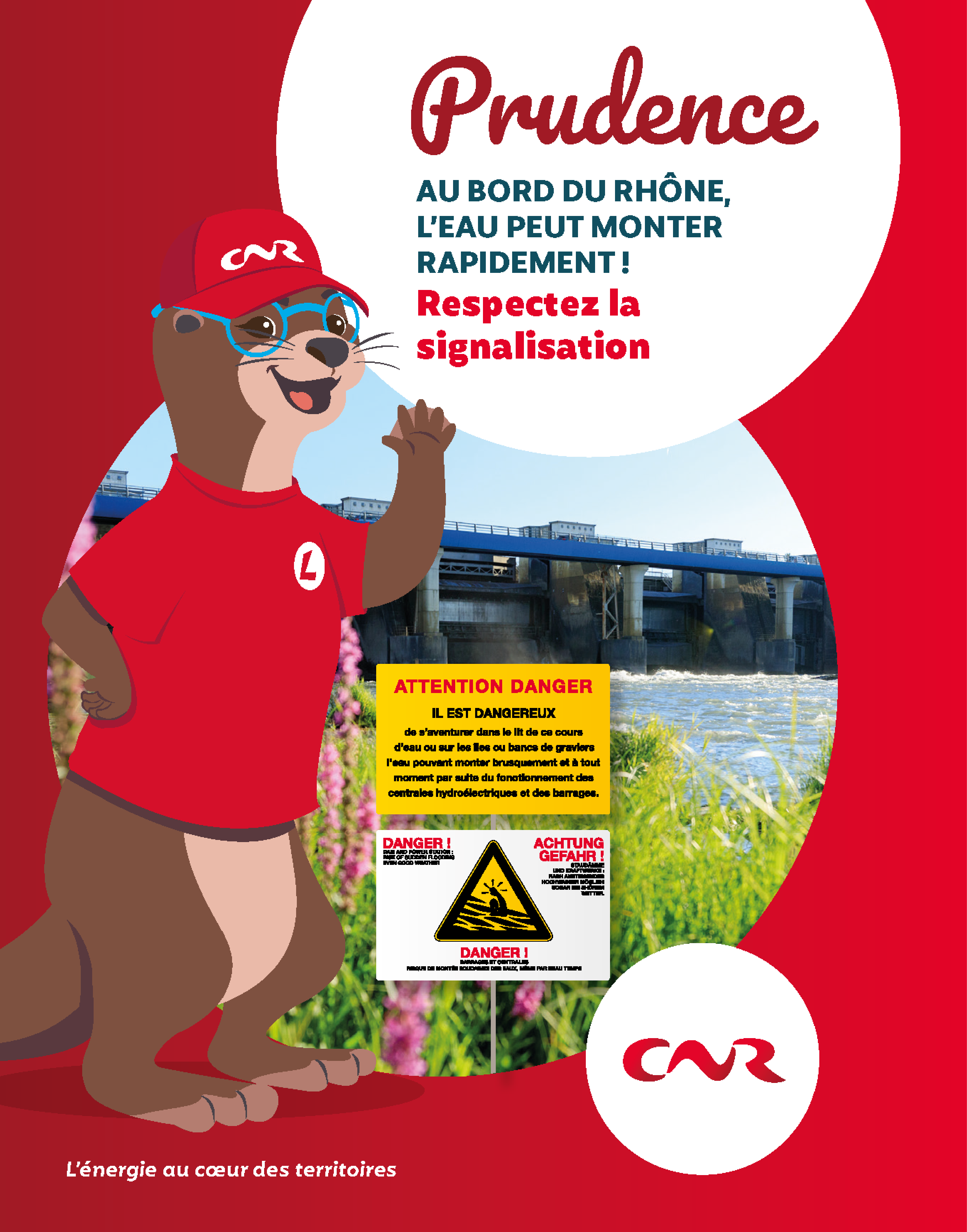
By the Rhône River, always stay cautious!
Every summer, people find themselves in dangerous situations on the Rhône. It is therefore very important to follow the signage near dams and hydroelectric facilities. The yellow signs are there to remind you.
Operating CNR's facilities often requires maneuvers that can be dangerous — for example, opening a dam can cause water levels to rise rapidly. People on gravel banks, islets, or low river thresholds may then be at risk.
 For your safety, stay on the riverbanks:
Do not venture into the riverbed of the Rhône;
Watch children closely near the water — they are less aware of danger;
As soon as the water rises, head back to the banks immediately — do not wait;
Obey all signage near the river.
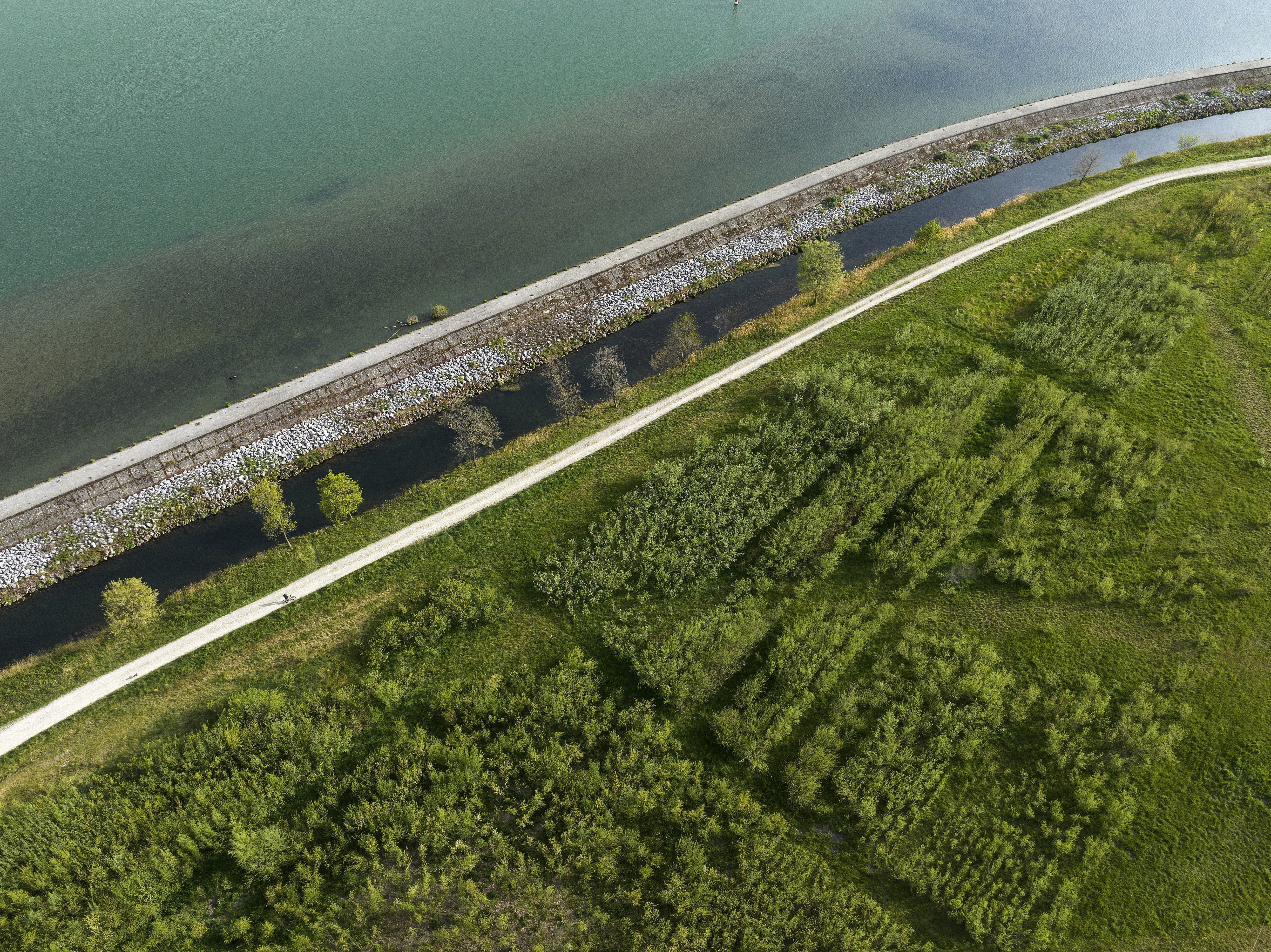
On CNR's levees, vegetation must be controlled and shade is rare!
The levees built by CNR along the Rhône are artificial earthworks, made of sand, gravel, silt, and riprap. Their stability is a major concern: if water seeps into the structure, erosion can occur, which may lead to levee failure and flooding of surrounding plains.
In some areas, the growth of trees and shrubs is not compatible with proper levee maintenance. Tree roots can cause significant damage, and tall plants can block visual inspections.
Therefore, CNR carries out maintenance operations in a way that balances environmental, safety, and structural concerns. For each section of the levee, these issues are assessed, and appropriate levels of vegetation management are recommended.
HELP US IMPROVE OUR PROJECTS!
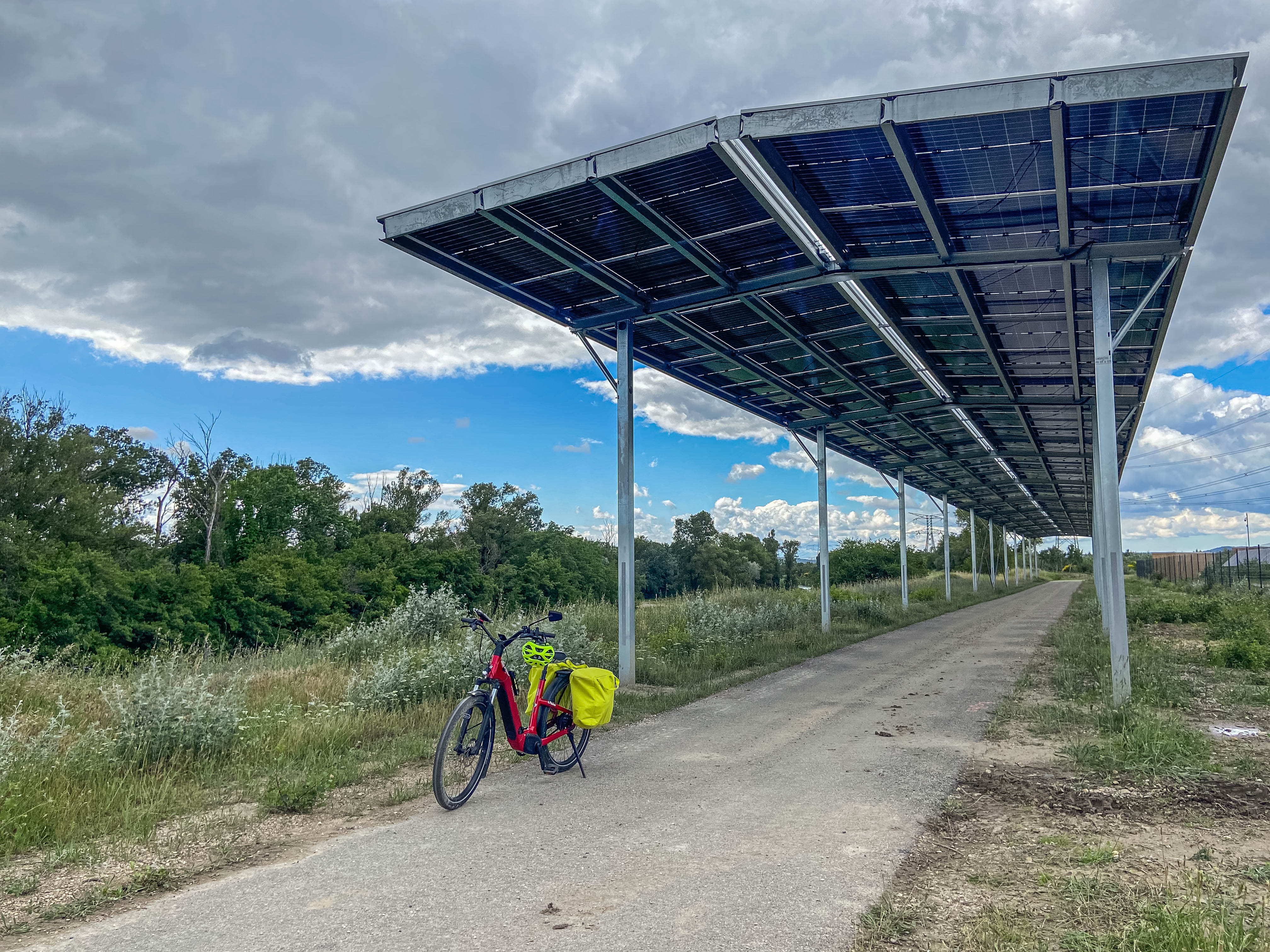
Generating renewable electricity over cycle paths — a great idea made real on the ViaRhôna in Caderousse (84)!
CNR and its partners have developed these solar canopies, not only to produce low-carbon energy, but also to protect you from the sun and bad weather.