
Jons / Lyon
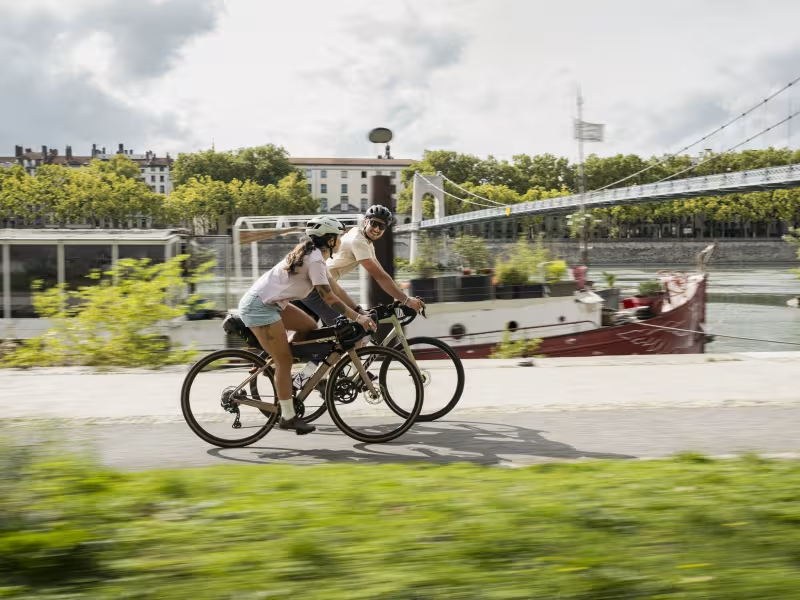
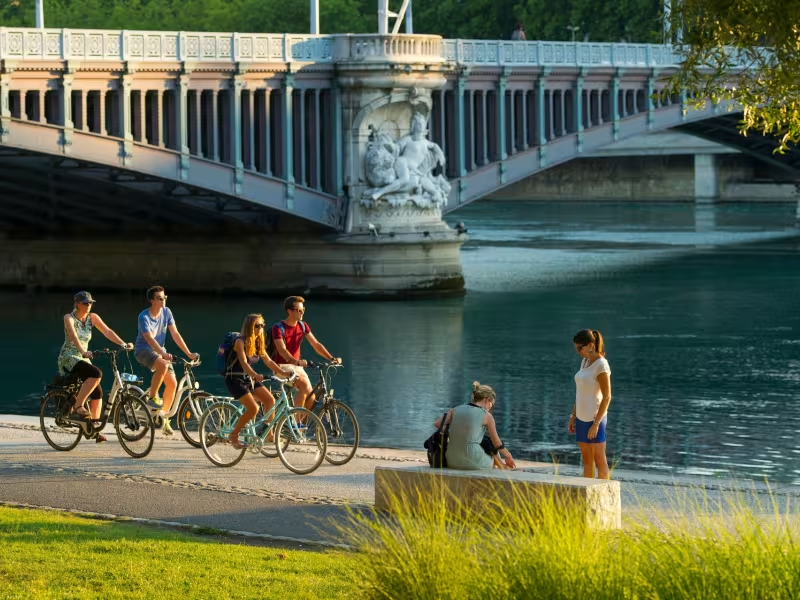
This ViaRhôna stage cleverly links the parks and lakes of Greater Lyon, including at Le Grand Large and Miribel-Jonage. Then enjoy the magnificent cycle route through central Lyon, along the Rhône’s banks. At the Rhône’s confluence with the Saône, you come to a brand-new quarter marked by contemporary architecture, the most striking building being the Musée des Confluences. The route is along greenways, but without specific signposting.
Gradients and elevation
Road types
Surface
The route
On unsignposted greenways up to Lyon. From Jons, follow the Jonage Canal to Jonage Bridge. Cross the bridge and turn left towards the Parc de Miribel. Follow the greenway through the park. Cross the Jonage Canal at Croix Luizet Bridge, on the cycle track beside the motorway. You then arrive in Lyon itself by following the Rhône’s quays, specially adapted to cyclists up to La Guillotière Bridge.
Alternative options
In Lyon, you can cycle across the Parc de la Tête d’Or public gardens, then rejoin the Rhône’s quays at Winston Churchill Bridge.
Connections
towards Place Bellecour, on Lyon’s central peninsula, and to Lyon’s two main train stations – Part-Dieu, east of the Rhône, and Perrache, on the central peninsula.
Train stations:
Montluel: 7,3 km from Jons
- TER line 35 : Culoz > Ambérieu-en-Bugey > Montluel > Lyon
Lyon Perrache: many trains to the Part Dieu railway station – high speed trains (TGV) departures for Paris, Nantes, Strasbourg, Lille
Lyon Part Dieu: local services and high speed trains departures for many destinations
- TGV (high speed trains) : connections with: Paris, Marseille, Montpellier, Nice, Toulouse, Nantes, Lille, Bruxelles, Strasbourg, Rennes, Rouen, Geneva (Lyria)
- TER (local services) : connections with: Grenoble, Clermont Ferrand, Bordeaux.
Tourist Offices:
- Dombes Cotière Tourist Office in Miribel Tel. +33 (0)4 78 55 61 16
- Grand Lyon Tourist Office Tel. +33 (0)4 72 77 69 69
Don't miss:
Le Grand Parc de Miribel-Jonage: This large park is a historic site, created through the development of the Jonage and Miribel canals. The park covers 2,200 hectares, of which 350 hectares consist of lakes whose waters come from the Rhône’s water table. So water sports are on offer as well as environmental trails. The outdoor sports and recreation centre is open year-round, allowing users to enjoy all sorts of activities in any season.
Lyon: its UNESCO World Heritage Site districts, listed in 1998, are the Presqu’île (the peninsula between Rhône and Saône), plus the Croix-Rousse hill above, and, west of the Saône, Fourvière Hill and the historic Vieux Lyon quarter below. Lyon is a gastronomic capital. Paul Bocuse may be the city’s most famous chef, but restaurants abound, including bouchons, traditional workers’ cafés.
Close to the Rhône, explore the Parc de la Tête d’Or and the Presqu’île’s shops and museums. As well as exploring Vieux Lyon’s Renaissance quarter, head down to the new quarter at the confluence of Rhône and Saône.
Musée des Confluences : Situated on the confluence of the Rhône and the Saône, the Musée des Confluences is an absolute must-see in Lyon. Set in the heart of a monumental structure of metal and glass, the Musée des Confluences presents a journey through time and across continents to observe the world around us.
Musée Gadagne: this twin museum, occupies one of the finest ensembles in the Vieux Lyon quarter. It holds a museum on the city’s history, plus a museum on puppets from around the world.
Canal de Jonage: There’s an alternative cycle route into Lyon using the Anneau Bleu route.
Markets:
Meyzieu : Thursday morning
Main markets in Lyon :
Croix-Rousse markets , boulevard de la Croix-Rousse (Lyon 1) and petite place de la Croix-Rousse (Lyon 4), every morning, except Mondays
Quai Saint-Antoine (Quai de Saône - Lyon 2), every morning
Place Carnot market (Lyon 2), Sunday morning
Farmers' Market, place Carnot (Lyon 2)
Organic market, quai Augagneur (Quai du Rhône): every morning, except Monday